
Platform capability
OperationalFile integrity monitoring for Namibian servers and workstations
Detects unauthorised change to critical files, configuration and binaries - one of the highest-signal, lowest-noise detections available.
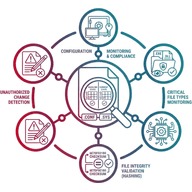
Overview
File integrity monitoring answers a question that is difficult to evade: has something on this system changed that nobody authorised. Attackers modify configuration to establish persistence, replace binaries to maintain access, and alter logging configuration to reduce their own visibility. All three are changes to files.
Vanguard monitors operating system paths, application configuration, web roots and credential stores. Changes are reported with the account and process responsible, so a legitimate deployment is distinguishable from an unauthorised modification without a manual investigation each time.
It is also one of the few detections that stays quiet in a healthy environment. Silence here is a designed state, not a failure - which is precisely why it is valuable when it does speak.
What this identifies
- Modification of system binaries and shared libraries
- Unauthorised change to security and logging configuration
- Web shells and unexpected files written to web-accessible directories
- Tampering with scheduled tasks, services and startup configuration
- Changes to credential and key material stores
Delivery status: Operational - deployed and in production service.
Capabilities
What file integrity & configuration does
Real-time change detection
Monitored paths report additions, modifications and deletions as they happen.
Attribution
Changes are reported with the responsible user and process where the platform can establish them.
Configuration drift tracking
Divergence from an approved configuration baseline, tracked over time.
Change-window awareness
Planned maintenance windows are recognised, so expected change does not generate noise that trains people to ignore the alert.
Under the hood
The engineering underneath
How this capability is actually engineered and operated. The specific detection tooling behind the security operations centre is shared with customers under agreement rather than published, for the same reason you would not publish yours.
- Integrity monitoring is configured across operating system paths, application configuration, web roots and credential stores.
- Baselines are established at onboarding and versioned from then on.
- A quiet integrity channel is treated as a healthy state by the monitoring layer, never as a fault.
The full platform architecture is documented on the architecture page.
Common questions
File Integrity & Configuration in Namibia: what buyers ask
- What is file integrity monitoring used for?
- It watches the files that should almost never change: system binaries, configuration, scheduled tasks and startup locations. When one of them does change without an approved reason, that is a strong signal of either an intrusion or an unrecorded change. It is one of the highest-signal, lowest-noise detections available.
- Will normal system updates set off constant alerts?
- No, because the monitoring layer is aware of approved maintenance windows and scheduled update activity. Change inside a known window is recorded rather than escalated. Change outside one is what reaches an analyst.
- Does this help with compliance requirements?
- It helps, because a durable record of who changed what and when is something most security standards and audits ask for. We can align what is monitored to the specific control you are being assessed against, but the record is useful on its own regardless of whether you are pursuing certification.
Services
Services delivered on this capability
The platform provides the capability. These are the engagements in which Tech49Originals operates it on your behalf.
- Operational
Security Monitoring
An entry-level monitored service for smaller Namibian organisations: continuous detection, alerting and monthly reporting, without a full SOC engagement.
Explore - Operational
Compliance Monitoring
Continuous evidence that your security controls are operating, produced automatically rather than reconstructed in the weeks before an audit.
Explore

Related
Capabilities that work with this one
- Operational
Endpoint Detection & Response
Agent-based visibility into process execution, persistence, configuration drift and vulnerability state on every monitored host.
Explore - Operational
SIEM & XDR
Collects security telemetry from servers, endpoints, network devices and cloud workloads into one correlated detection engine.
Explore - Operational
Vulnerability Management
Continuous assessment of operating system packages and application dependencies, prioritised by exploitability and exposure rather than raw severity score.
Explore

Get started
Find out what is actually happening on your network
A short conversation is usually enough to establish whether monitoring would tell you something you do not already know. There is no obligation and no sales script.